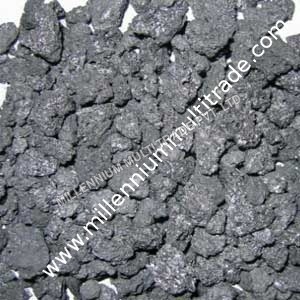



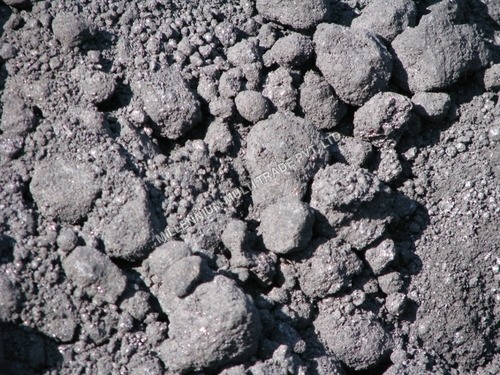
Pet Coke
23.00 - 55.00 INR
Product Details:
- Form Solid
- Density 2.06 Gram per cubic centimeter(g/cm3)
- Water Absorption Negligible
- Usage & Applications Used as a fuel, reducing agent, and in metallurgical operations
- Application For Industry
- Purity(%) Carbon content > 80%
- Surface Finish Rough
- Click to View more
X
Pet Coke Price And Quantity
- 23.00 - 55.00 INR
- 100 Kilograms
- 8 - 14%
- 7800 - 8500 kcal/kg
- Store in dry, covered area to avoid moisture uptake
- 880 - 1050 kg/m3
- Less than 1.5% (varies with source)
- More than 700 C
- Typically 0 - 50 mm or as required
- 80% - 92%
- Requires dust control during handling and storage
- Varies from 0.5% to 7% depending on grade (low, medium, high sulfur)
- 0.5% - 1.5%
Pet Coke Product Specifications
- Moderate to high
- Depending on composition, generally above 2000 C
- Reversible
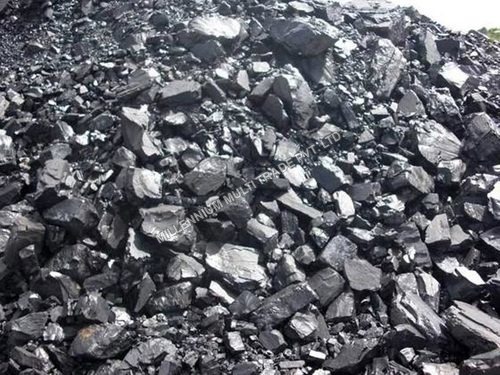
- High carbon (above 80%), low hydrogen, small quantities of sulfur, nitrogen, and metals (like vanadium, nickel)
- Fuel grade petroleum coke
- High mechanical strength
- Not applicable (used as fuel, not a refractory itself)
- Block
- Carbon content > 80%
- Mohrs hardness: about 5-6
- Rough
- Used as a fuel, reducing agent, and in metallurgical operations
- For Industry
- Low to moderate
- 2.06 Gram per cubic centimeter(g/cm3)
- Negligible
- Gray
- 1.98 - 2.06
- Solid
- 8 - 14%
- 7800 - 8500 kcal/kg
- Store in dry, covered area to avoid moisture uptake
- 880 - 1050 kg/m3
- Less than 1.5% (varies with source)
- More than 700 C
- Typically 0 - 50 mm or as required
- 80% - 92%
- Requires dust control during handling and storage
- Varies from 0.5% to 7% depending on grade (low, medium, high sulfur)
- 0.5% - 1.5%
Pet Coke Trade Information
- Cheque
- 1000 Kilograms Per Day
- 1 Week
- Yes
- Sample costs shipping and taxes has to be paid by the buyer
- Carton Box
- All India
Product Description
Product Specification of Pet Coke
| Sulphur Content % | 4.5 4.7 |
| Hydrogen | 04/05/16 |
| Nitrogen | 1.89 |
| Vanadium | 0.2 |
| Nickel | 0.04 |
| Iron | <100 ppm |
| Ash Content % | 0.5 |
| Fixed Carbon % | 86-89 |
| Volatile Matter % | 8-12 |
| Hardgrove Index | 40-70 |
| Moisture | 12 |
| Empty Volume | 50 |
| Calorific Value | 14.000 Bto / Lb |
| Max Particle Size | 5 cm |
| Bulk Density | 900-100 Kg/m |
High-Efficiency Industrial Fuel
Pet coke's superior carbon concentration and calorific value make it highly desirable as a fuel and reducing agent in metallurgical and other energy-intensive industries. Its dense form and fixed carbon ensure reliable performance and efficiency during combustion, providing consistent heat for large-scale operations.
Safe Handling and Storage
Proper handling of petroleum coke is essential due to its fine particulates. Employ dust control techniques during transport and handling to ensure safety. Storage in covered, dry conditions is recommended to prevent moisture absorption, preserving the material's quality and calorific value for extended durations.
FAQ's of Pet Coke:
Q: How is pet coke typically used in industrial applications?
A: Pet coke serves primarily as a fuel and reducing agent in metallurgical processes, cement manufacturing, and power generation due to its high fixed carbon and calorific value.Q: What benefits does pet coke offer compared to conventional coal?
A: Pet coke provides higher carbon content, greater calorific value, and lower ash content than many coals. This leads to improved combustion efficiency and less ash disposal in industrial operations.Q: What are the primary considerations for handling and storing pet coke?
A: Pet coke should be handled with dust control measures due to its fine particles. Storage in a dry, covered environment is vital to prevent moisture uptake and maintain its energy content.Q: When should low, medium, or high sulfur pet coke be selected?
A: The sulfur grade choice depends on environmental regulations and end-use requirements. Low sulfur pet coke is preferred for applications with stringent emissions standards, whereas higher sulfur grades may suit less regulated or sulfur-tolerant operations.Q: What is the process of ensuring quality in pet coke supply?
A: Quality assurance includes analyzing chemical composition, grain size, ash, moisture, and sulfur content to match industry specifications and regulatory guidelines for intended applications.Q: Where is pet coke sourced from and how is it distributed in India?
A: Pet coke originates from oil refineries and is distributed throughout India by manufacturers, exporters, suppliers, and traders to industrial end-users.Tell us about your requirement

Price:
Quantity
Select Unit
- 50
- 100
- 200
- 250
- 500
- 1000+
Additional detail
Mobile number
Email

Other Products in 'Pet Coke' category

- MILLENNIUM MULTI TRADE PVT. LTD.
GST : 24AAGCM9165R1ZN - "Janak" Mahavir Society, Birla Hall Road, B/h. Jethwa Hostel, Porbandar - 360575, Gujarat, India
- Phone :08045802865
-
- Mr. Manoj N. Modha (Director)
- Mobile :08045802865
- millenniumpbr@yahoo.com
Join Us on : 
 Send Inquiry
 |
Millennium Multi Trade Pvt. Ltd.
All Rights Reserved.(Terms of Use) Developed and Managed by Infocom Network Private Limited. |
